A Roman road – the ancient Appian Way – was added to UNESCO’s World Heritage list on July 27th 2024.
The news flooded my mind with memories of a similar road, the Via Domitiana. Instantly I was back in the heat of a blazing summer’s day on the outskirts of Naples celebrating a food festival – the Sagra delle Antiche Taverne (Festival of the Old Taverns). That sagra was hosted by a small farm belonging to an agricultural college, the Istituto di Stato per l’Ambiente e l’Agricoltura “Giovanni Falcone”, near Licola in Campania. Stretches of the old stone road ran through our festivities, bringing us together just as it had for centuries.
To mark the summer in which official international attention has been paid to at least one of these ancient roads, here is a copy of my post and photographs from the Sagra delle Antiche Taverne in 2015.
___
A ‘sagra’ on an old Roman road north of Naples, Italy
‘Sagre‘, and this was our first, are the right-in-the-thick-of-it festival celebrations that usually revolve around food.
Originally the meaning was linked to churches and the Latin word sacrum – holy. Now they are still about expectation and celebration, but often with a local speciality centre stage rather than the church.
Our host for the day of our first ‘sagra‘ was a small farm that belongs to an agricultural college, the Istituto di Stato per l’Ambiente e l’Agricoltura “Giovanni Falcone”, near Licola in Campania. Together we were celebrating the Sagra delle Antiche Taverne – Festival of the Old Taverns.
By three in the afternoon we could hardly move. The sun and the food had stretched us in all directions … and then came the strawberries.
We had just squeezed in the last juicy mouthful when a gift arrived … an extra serving for each of us.
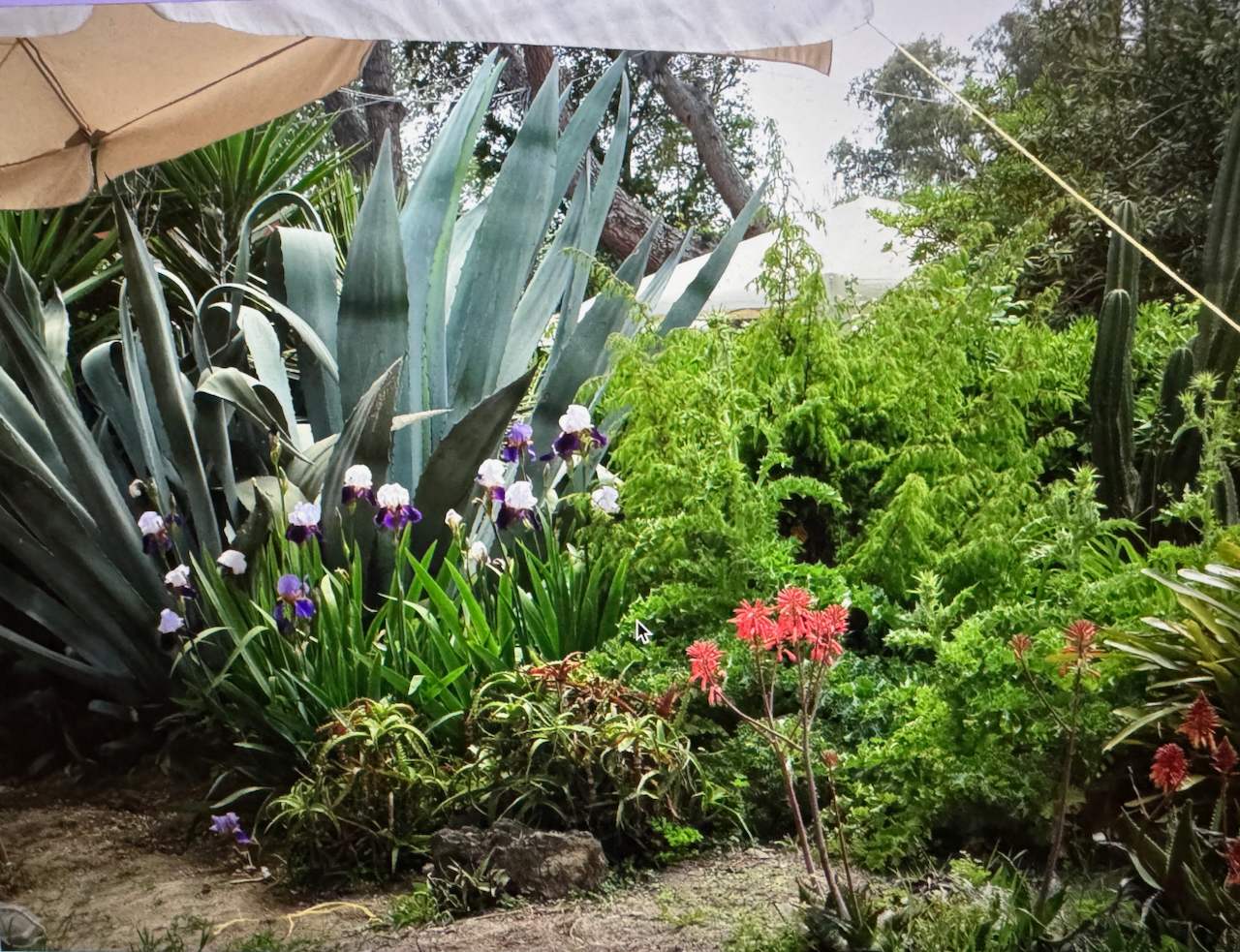
Inside the college gates was a world of farm produce and all of it at various stages of life.
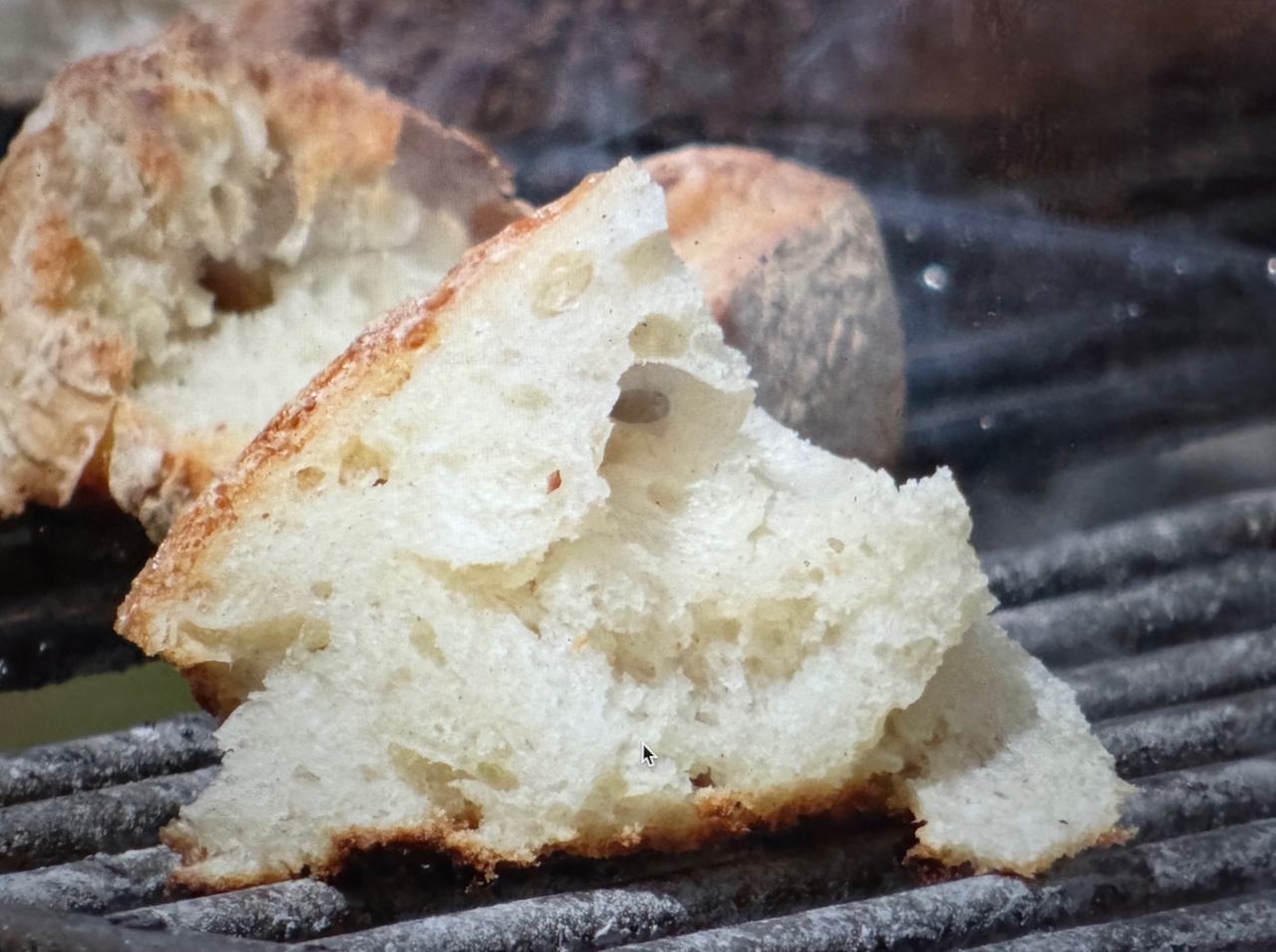
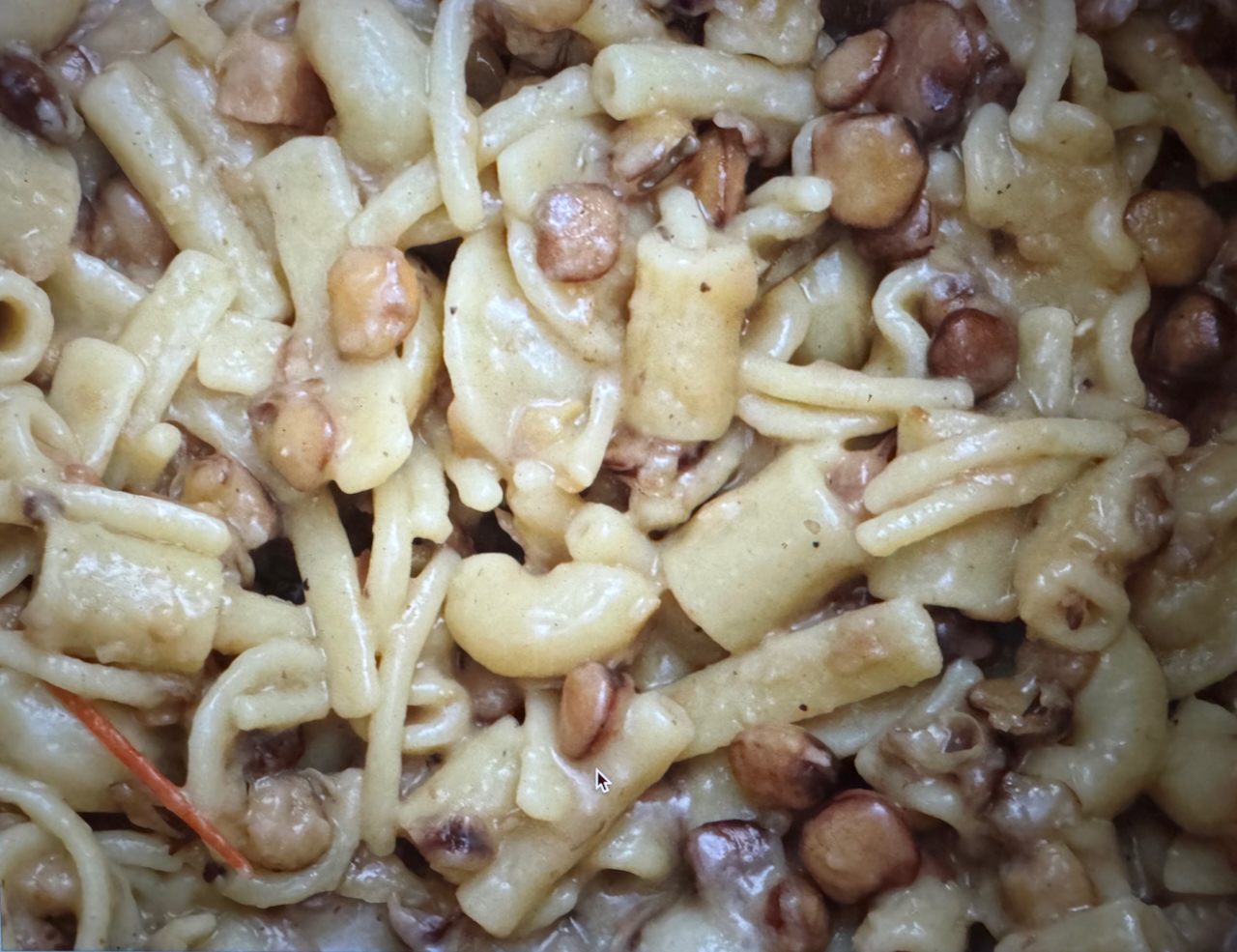
There were fields of beans and freshly-picked vegetables; greenhouses of plants; hives of bees and jars of honey; pens of live animals; roasting cuts of meat; and tables of cheeses, salamis and jars of pesto. The different areas wove together, dotted with menus and choices.
Eventually we did make our choices and slowed to a sit-down with our selection of food and local red wine. We didn’t have to move far to discover the strawberries, and by the time the second serving found us we could hardly move at all.
Around us children played, parents scolded or ignored, and the chefs, a mix of students and volunteers in traditional costume, laboured over open fires and steaming pots.
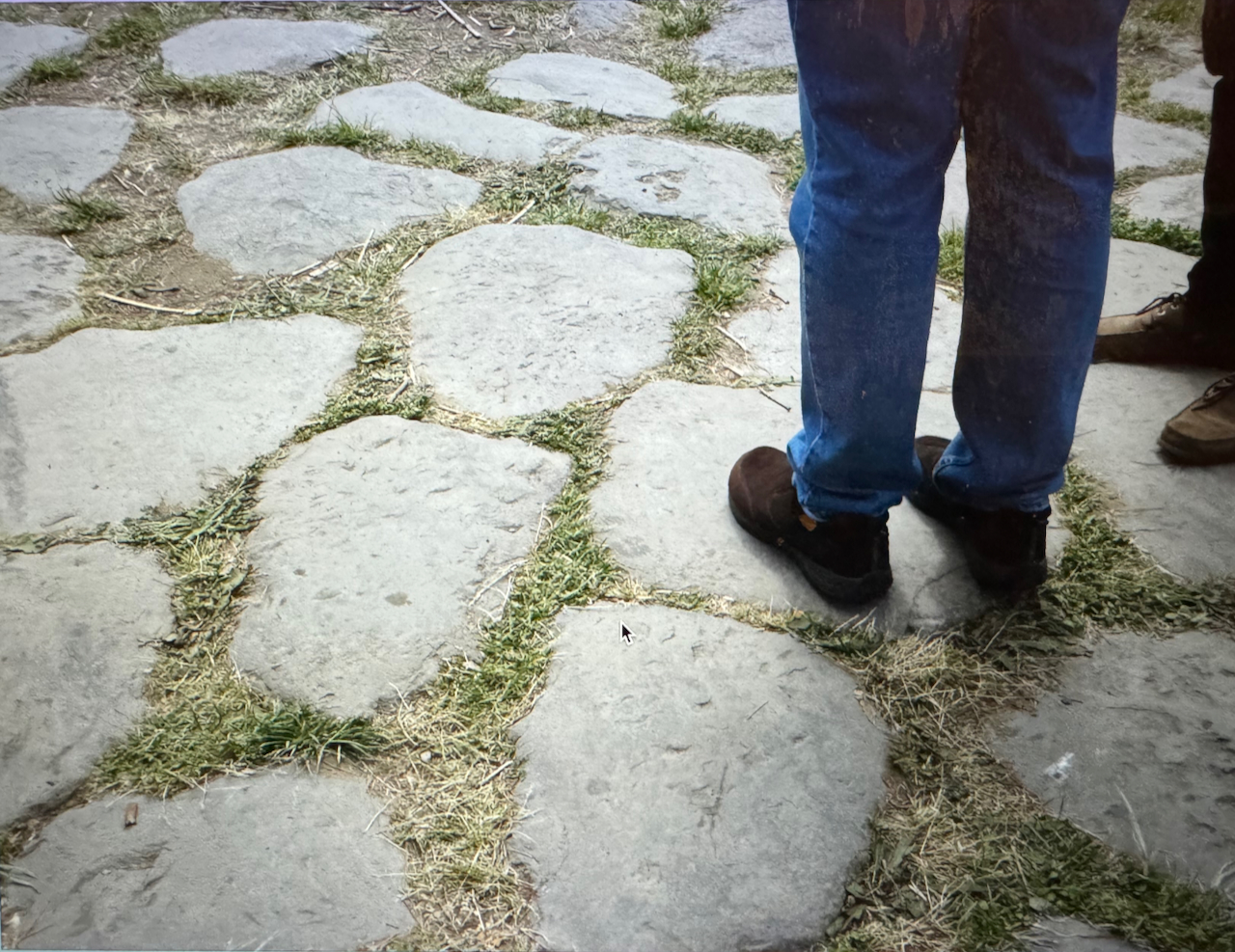
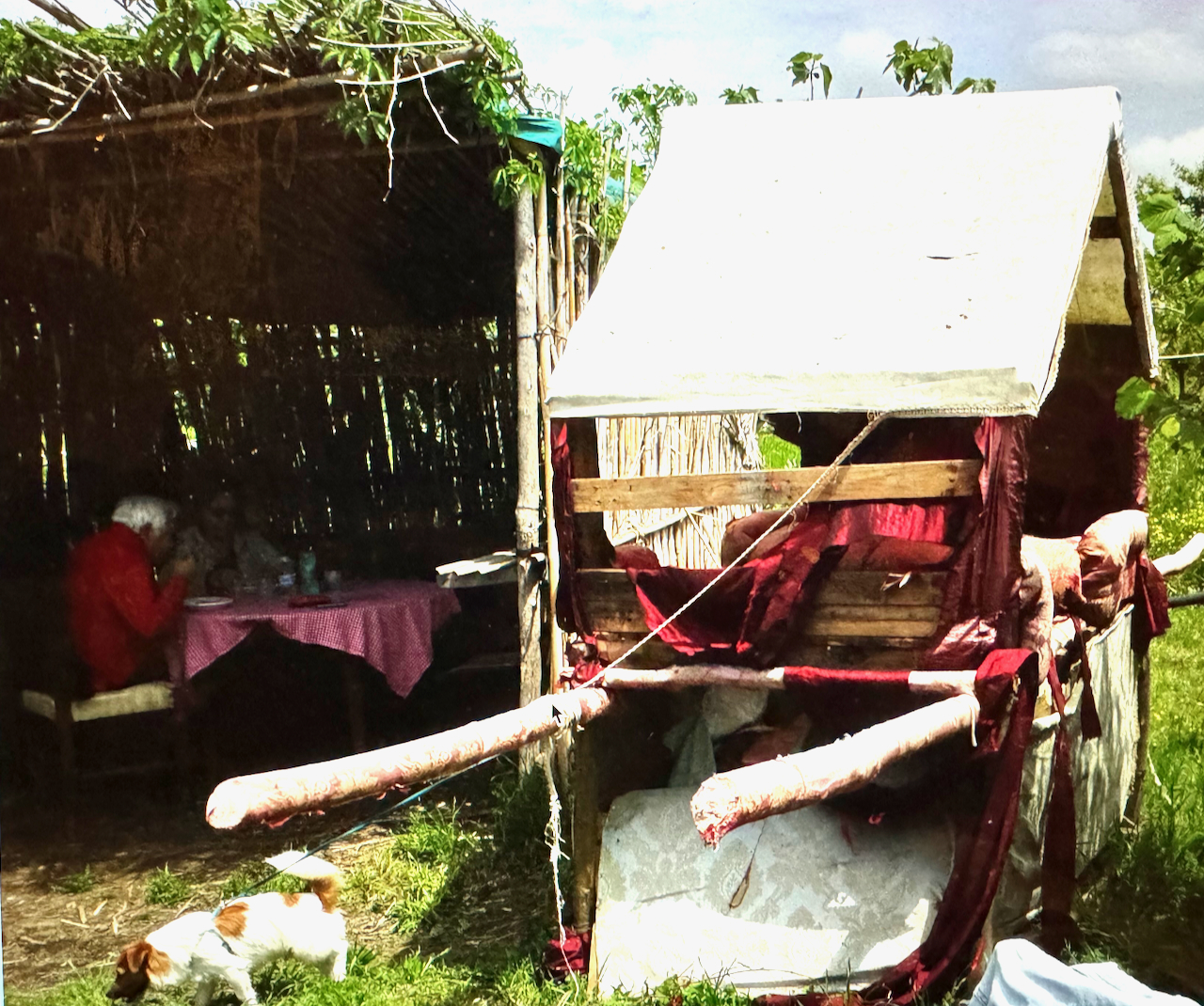
Most of the cooking was done outside the ‘antiche taverne‘, the bamboo huts that lined the huge, worn stones of the Via Domitiana.
This via is an old, now mostly disused, Roman road that used to run from Sinuessa (Mondragone) to Cuma. It was built by the Emperor Domitian in AD 95 – a reminder of the importance of ‘Campania Felix‘ to the Romans. They loved this region – they chose it for their holiday villas, and they used its volcanic soil to help build their empire.
Now here we were, almost two thousand years later, with our plastic plates and forks, right beside the original, hand-quarried rocks of this ancient Roman artery – the Via Domitiana.
After a couple of hours of sunburnt feasting we left the college to drive back along the new Via Domiziana.
Our route took us through the suburbs that build out from Naples – in one sense depressing, but in another hopeful, for in amongst the buildings there are still tight, carefully cultivated scraps of land.
In the spring these are thick with blossom, and in the summer their harvests feed the neighbourhoods, with the distance between the plates and the plants often hardly more than a couple of fields.
Some produce has to take to the roads to reach the market stalls or menus but it gets there quickly, usually crammed on to the back of tiny trucks or aged Fiats.
The local menus, and the loaded trucks that feed them are, just like every ‘sagra‘, a reminder that what matters is the land.
The tragedy is that, despite these reminders, parts of Campania’s land have suffered bitter years of careless waste disposal and abuse, of “ecological sin” as the Pope describes it. The damage is undeniable but there is hope … there has to be in a place where so many of the locals have such evident love for their countryside and its produce.
The continued existence of the sagre themselves is surely a good sign – a sign that here the rhythms of the land have always been understood and will not be easily forgotten.
(Here is further information on the Appian Way’s addition to the Unesco list)